Ethiopian Ministry of Education Sets New Rules for University Leadership
Ethiopia is changing the way it selects its university leaders. The Ethiopian Ministry of Education (MoE) recently published Directive No. 1146/2018, which changes the rules for the election of presidents and vice presidents at governmental higher education institutions. This directive is significant for anyone who teaches at a university or serves on a university board.
There are many reforms underway at Ethiopian universities at the moment. The Ethiopian Ministry of Education notes that the changes require qualified, ethical, and trusted leaders. The purpose of this directive is to create a merit-based leadership system, not a favor-based or political one.
As per the Directive No. 1146/2018, candidates for President and Vice President are scored using a 30/30/40-point system. Each segment deals with a different subject.
Academic Qualifications and Rank (30 Points)
This section examines level of education and academic rank. This is where candidates with higher ranks (such as full professor) do better. It’s a reward system for people who have worked hard in their studies.
Work Experience (30 Points)
This section assesses candidates’ experience in institutional development and leadership. The more points you earn, the longer and stronger your track record of leadership.
Development of a strategic planning and approach (40 Marks)
This is the largest one, and it is logical. Candidates are required to submit a detailed plan to the University Council and Board. They must describe what they would do to solve the institution’s issues and where they would go. Under this new system, there is a lot of weight to vision.
Who Reviews the Candidates?
The Ministry didn’t leave this up to one group. There are two separate committees for the process.
- A committee of 4 members of the charter school staff to screen candidates.
- A 7-member evaluation and selection committee.
This is a process of breaking the job down that introduces a level of checks and balances. There is less control over the outcome by one group.
Not just anyone can run for these positions. The directive contains some hard-and-fast requirements.
Candidates must:
- Have no convictions for serious crimes such as corruption, fraud, and any other form of violation of ethics.
- Have no pending legal cases that could affect their job performance
- Be Ethiopian or of Ethiopian origin
- Be able to serve a full term before hitting retirement age
Male candidates running for President should have at least an associate professor-level academic qualification. That’s a pretty significant obstacle for men looking to become the highest-paid.
Special provisions are made for women
The order also allows for greater inclusivity of women in leadership. If there are not enough female candidates, women can be given the chance to compete for such jobs with a second degree rather than the higher academic qualification required of men. This is a straight push in the right direction to increase the number of Ethiopians at the highest levels of universities.
New term limits and rules on re-election
This is one of the larger modifications. The new rule is that the university president’s term of office is 6 years, and the vice president’s is 4 years.
There are other guidelines on running again, too:
- A president who has served two consecutive terms at any government university can’t run again for President.
- A vice president who has served two terms in a row can still run for President. That door stays open.
In the experience category, candidates for President must have at least 2 years of experience as President or 3 years of experience as Vice President/Dean.
Can a President Run For a Second Term Without Competing?
Yes, but only if certain conditions apply. A university that does well under its President can have that President reappointed to a second term without a re-competition. But this must be approved by the Ethiopian Ministry of Education. It’s not automatic.
The evaluation of performance is done in the following ways
They may not remain President for six years after being elected. The university board must evaluate the leader quarterly.
These are some of the reasons that may lead to a recommendation for removal to the Ethiopian Ministry of Education.
- Two back-to-back six months evaluations scoring less than 60 percent
- Identifying health issues that prevent the leader from performing their duties.
- When there are serious disciplinary issues or corrupt actions.
This maintains accountability for leaders throughout their leadership, not merely at its commencement.
What if someone doesn’t agree with the result?
There is a complaint procedure in the directive as well. Users who experience any problems with the selection/election may submit a complaint to the university board. They have 10 days from the time the results are made public to do so.
What happens if they don’t agree with the board’s decision?
They have the right to appeal directly to the Ethiopian Ministry of Education. That provides a true opportunity for candidates to challenge results they think are unfair.
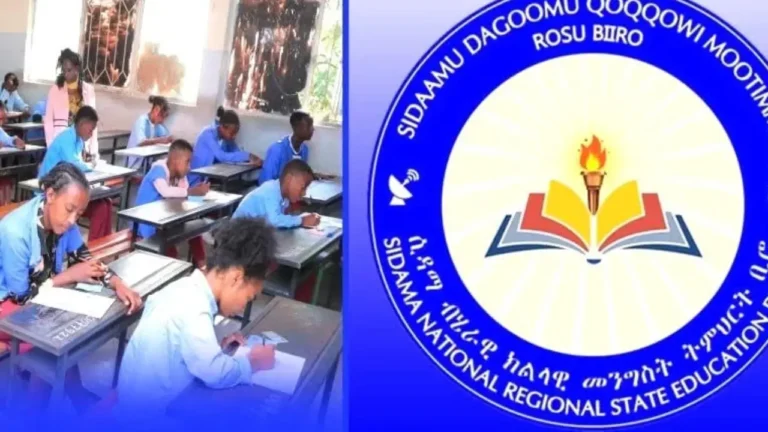
Moreover, yesterday in the Central Ethiopia Region 1, 1,569 teachers from middle and secondary schools gathered to take an entrance exam for a government-sponsored program.



0015352
0015352